
Featured

These Parents Should Be in JAIL!!!!


The Strangest True-Crime Story Yet

The new Netflix documentary Abducted in Plain Sight is a bewildering account of one girl’s kidnapping by a family friend
NETFLIX

One of the scenes in Abducted in Plain Sight that best encapsulates the strangeness of its story comes midway through, after the second time a teenager named Jan Broberg has been kidnapped by a close family friend. That friend, Robert Berchtold, calls Jan’s mother, Mary Ann, and falsely tells her that Jan is prostituting herself and selling drugs. “Oh my goodness,” Mary Ann replies, in a steady, even tone, as if he’s just told her that seasonal allergies might be worse than usual this summer, or that two people brought potato salads to the potluck. “Oh dear. Oh. Now I won’t be able to sleep.”

Abducted in Plain Sight was first released as a documentary in 2017 with the title Forever ‘B,’ but it’s gained rather more traction this month after being added to Netflix’s true-crime library. Over the past week, viral tweets and Reddit threads and various expressions of incomprehension have batted around the internet, as viewers try to make sense of what exactly they’ve just watched. Much of the outrage targets Jan’s parents, who participated fully in the documentary, and whose behavior in response to Berchtold’s prolonged abuse of their daughter strikes many viewers as shockingly inadequate at best. Jan—now Jan Broberg Felt, an actor who’s appeared in Criminal Minds and Everwood—has subsequently defended her mother and father.

Manipulation and grooming are not understood by so many. It happened to my whole family, this man was a master and my parents saved my life. They’re the bravest people I know, willing to try to help the rest of you see what they didn’t. That is the only reason we told our story.

Part of the problem is that Abducted in Plain Sight, a 90-minute movie in a field populated mostly with six- or eight-hour series, is focused entirely on telling a story rather than illuminating it. It unpacks too many bizarre events in a short time frame to allow for much additional analysis. And the Broberg family, confessional to a fault, are primed more for honesty than for self-inspection. The result is a documentary that exposes them for public scrutiny without pausing to really interrogate their actions.

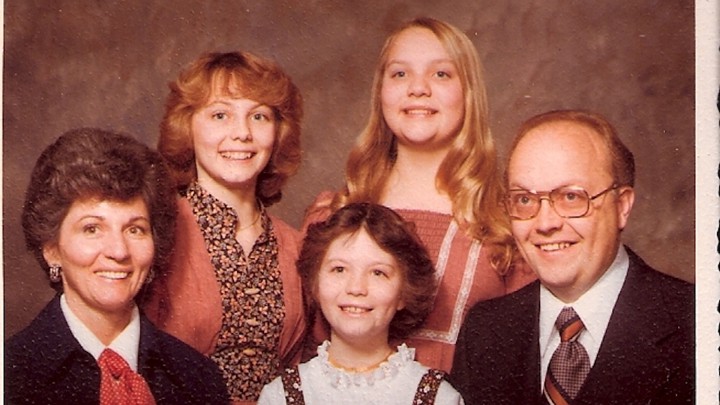
Directed by Skye Borgman, Abducted in Plain Sight begins in the early 1970s in Pocatello, Idaho. Jan was one of three daughters born to Bob Broberg, a florist, and Mary Ann. After becoming fast friends with a new family called the Berchtolds, the Brobergs noticed that the charismatic “fun dad” Robert Berchtold (known as “B”) seemed overly interested in Jan. “He was like a second father to me,” Jan explains, before detailing her memories of how he drugged and molested her. The movie includes pictures Berchtold took of Jan as a 12-year-old girl, all straw-colored hair, wide eyes, and freckles. In one, her underwear is clearly visible.

In October 1974, Berchtold offered to pick Jan up from her piano lesson and take her horseback riding. He never brought her home. The details that follow spiral quickly from strange to appalling. The Brobergs were going to call the police until Gail Berchtold, Robert’s wife, asked them not to. Jan’s family waited several days before notifying the FBI, and even after doing so were reluctant to accept that Robert Berchtold had actually done anything wrong. Pete Welsh, the lead FBI agent investigating Jan’s disappearance, had to “drill that into our minds,” Mary Ann explains in an interview. “He kidnapped her. She’s your daughter. She’s gone.”

The Brobergs’ relative calm in the face of their 12-year-old daughter’s abduction by an adult man is one of the most immediately disturbing elements of the story. Other revelations, though, come thick and fast. Berchtold, it transpires, had repeatedly tried to infiltrate other families with young girls, and had been reprimanded by the high council in his church, the Church of Jesus Christ of Latter-Day Saints, for doing so. He convinced Bob and Mary Ann that his subsequent treatment by a psychologist involved spending multiple nights in bed with Jan. “Neither one of us was comfortable with him doing it,” Mary Ann says, “but it was his therapy.”

The parental behavior that Mary Ann and Bob freely confess to in Abducted in Plain Sight is so bewilderingly naive that the more salacious and peculiar events Borgman goes on to lay out are almost hard to grasp. Without spoiling the most shocking ones, they involve multiple confessions of extramarital sexual relationships, as well as an elaborate plot involving aliens that Berchtold used to prey on Jan. Berchtold was arrested for kidnapping, but the Brobergs, under duress, withdrew their most serious charges. Berchtold was sentenced to five years in prison anyway but served only 10 days. Bob and Mary Ann, Agent Welsh states, were told to cut off communication with the Berchtolds. Which he adds, emphatically, “They. Did. Not. Do.”

Here is where Borgman’s unwillingness or lack of space to parse exactly what’s going on feels most acute. A few people in the movie vaguely assert that it was the 1970s, and no one really understood what pedophiles were, or that intimate friends and family members could also present a real danger to children. “We never called ’em pedophiles; I’m sure it was in the dictionary someplace,” Agent Welsh says. And yet several local families had been troubled enough by Berchtold’s attempts to get close to their children that the church intervened. People knew, or certainly had surmised, that he was a threat. Faith leaders knew. The Brobergs seemingly knew. Nonetheless Berchtold, even after his conviction and his briefest of interludes in prison, was able not only to be around children, but also to purchase and run a “family-fun center” as a business.inRead invented by Teads

In particular, the fact that the Berchtolds and the Brobergs were all part of the same faith community seems to merit more analysis than it receives. So does a legal system that allowed Berchtold to kidnap, drug, and rape a child and receive a virtual slap on the wrist. The film implies that the Broberg parents were both brainwashed and manipulated by Berchtold, which accounts for some of their actions, but not nearly all. Karen Campbell, one of Jan’s sisters, comes closest to analyzing what happened when she posits that her parents are simply experts in denial. That’s why, she says, “they didn’t probe more when they knew something had happened. They didn’t want to know. It’s too painful for them to realize that they allowed that to happen to her.”

For viewers watching at home, though, judging the Brobergs is easier, even if it’s hard to ever feel fully informed, or to believe that the family knew what they were getting into by airing everything so publicly. The hope for Abducted in Plain Sight, Borgman and Jan Broberg Felt have both said, is that it helps end the culture of silence around sexual abuse and assault. The reality, though, is that the extraordinary nature of the revelations in the film, and their insufficient excavation, end up overshadowing the much more urgent subject at hand.

Featured

Garden Globe! My new project bc I need a creativity break from tweeting to 45!

http://www.gardeningknowhow.com/garden-how-to/projects/making-a-garden-globe.htm

They say to use colored glass … this one looks like a mirror.
Guess I’ll be smashing mirrors and stuff I find at my recycling place!
Featured

Mae West Autobiography – she was/IS awesome!

Here’s her autobiog. pdf

She started really peaking in her career at 30+ yrs old!

In 1933 she was one of the largest box office draws in the US …
AND by 1935 was the highest paid woman, and second highest paid PERSON!
(just under Wm Rand. Hearst)

Featured

Criminal Activities of Exec Branch by Presidential Administration

PresidAdminConvictions

Jack Daniel’s Embraces a Hidden Ingredient: Help From a Slave

by Clay Eisen New York Times

In a photo in Jack Daniel’s old office, Daniel, with mustache and white hat, is shown at his distillery in Tennessee in the late 1800s. The man to his right could be a son of Nearis Green, a slave who helped teach Daniel how to make whiskey.

By Clay Risen

  • June 25, 2016

LYNCHBURG, Tenn. — Every year, about 275,000 people tour the Jack Daniel’s distillery here, and as they stroll through its brick buildings nestled in a tree-shaded hollow, they hear a story like this: Sometime in the 1850s, when Daniel was a boy, he went to work for a preacher, grocer and distiller named Dan Call. The preacher was a busy man, and when he saw promise in young Jack, he taught him how to run his whiskey still — and the rest is history.COOKING: Feast on recipes, food writing and culinary inspiration from Sam Sifton and NYT Cooking.Sign Up

This year is the 150th anniversary of Jack Daniel’s, and the distillery, home to one of the world’s best-selling whiskeys, is using the occasion to tell a different, more complicated tale. Daniel, the company now says, didn’t learn distilling from Dan Call, but from a man named Nearis Green — one of Call’s slaves.

This version of the story was never a secret, but it is one that the distillery has only recently begun to embrace, tentatively, in some of its tours, and in a social media and marketing campaign this summer.

“It’s taken something like the anniversary for us to start to talk about ourselves,” said Nelson Eddy, Jack Daniel’s in-house historian.

Nearis Green’s story:

Frontier history is a gauzy and unreliable pursuit, and Nearis Green’s story — built on oral history and the thinnest of archival trails — may never be definitively proved. Still, the decision to tell it resonates far beyond this small city.

For years, the prevailing history of American whiskey has been framed as a lily-white affair, centered on German and Scots-Irish settlers who distilled their surplus grains into whiskey and sent it to far-off markets, eventually creating a $2.9 billion industry and a product equally beloved by Kentucky colonels and Brooklyn hipsters.

Left out of that account were men like Nearis Green. Slavery and whiskey, far from being two separate strands of Southern history, were inextricably entwined. Enslaved men not only made up the bulk of the distilling labor force, but they often played crucial skilled roles in the whiskey-making process. In the same way that white cookbook authors often appropriated recipes from their black cooks, white distillery owners took credit for the whiskey.

In deciding to talk about Green, Jack Daniel’s may be hoping to get ahead of a collision between the growing popularity of American whiskey among younger drinkers and a heightened awareness of the hidden racial politics behind America’s culinary heritage.

Some also see the move as a savvy marketing tactic. “When you look at the history of Jack Daniel’s, it’s gotten glossier over the years,” said Peter Krass, the author of “Blood and Whiskey: The Life and Times of Jack Daniel.” “In the 1980s, they aimed at yuppies. I could see them taking it to the next level, to millennials, who dig social justice issues.”

Jack Daniel’s says it simply wants to set the record straight. The Green story has been known to historians and locals for decades, even as the distillery officially ignored it.

According to a 1967 biography, “Jack Daniel’s Legacy,” by Ben A. Green (no relation to Nearis), Call told his slave to teach Daniel everything he knew. “Uncle Nearest is the best whiskey maker that I know of,” the book quotes Call as saying.

Slavery ended with ratification of the 13th Amendment in 1865, and Daniel opened his distillery a year later, employing two of Green’s sons. In a photo of Daniel and his workers taken in the late 19th century, a black man, possibly one of Green’s sons, sits at his immediate right — a sharp contrast to contemporaneous photos from other distilleries, where black employees were made to stand in the back rows.

But corporate history-keeping was a rare practice in those days, and over time memories of Green and his sons faded.

“I don’t think it was ever a conscious decision” to leave the Greens out of the company’s story, said Phil Epps, the global brand director for Jack Daniel’s at Brown-Forman, which has owned the distillery for 60 years. Still, it is unlikely that anyone in the Jim Crow South thought a whiskey marketed to whites should emphasize its black roots.

As the brand’s anniversary approached, the company started researching its various origin stories. It decided that the case for Nearis Green’s contribution was persuasive, and should be told. “As we dug into it, we realized it was something that we could be proud of,” Mr. Epps said.

A business built on slave help may not seem like a selling point, which may explain why Jack Daniel’s is taking things slowly. The Green story is an optional part of the distillery tour, left to the tour guide’s discretion, and the company is still considering whether it will flesh out the story in new displays at its visitors center.

However far the distillery decides to go, it is placing itself at the center of a larger issue that distillers and whiskey historians have begun to grapple with only in the last few years: the deep ties between slavery and whiskey.

“It’s about paying down the debts of pleasure that have accrued over time,” said John T. Edge, the director of the Southern Foodways Alliance at the University of Mississippi.

An exhibit on George Washington and slavery opening this fall at the first president’s Northern Virginia home, Mount Vernon, documents how he relied on six slaves (and two Scottish foremen) to run his rye whiskey distillery, one of the largest on the East Coast.

“They were key to the operation in making whiskey,” said Steve Bashore, who helps run a working replica of Washington’s distillery. “In the ledgers, the slaves are actually listed as distillers.”

Slavery accompanied distilling as it moved inland in the late 18th century, to the newly settled regions that would become Tennessee and Kentucky. Though slave owning was nowhere near as common there as it was farther south, by the 1800s many successful farmers had at least a few slaves, who tended to be closely involved with whiskey production.

Some of the earliest prominent Kentucky distillers, like Elijah Craig, Henry McKenna and Jacob Spears, relied on slaves to run their operations. (Craig and McKenna’s names are now on whiskeys made by Heaven Hill Brands, but those were created long after slavery was abolished.)

Washington wasn’t the only president to use slaves in his distillery. In an 1805 advertisement, Andrew Jackson offered a bounty for a runaway slave named George, whom he identified as “a good distiller.”

Databases of ads for slave sales, as well as runaway slaves, are full of references to slaves as skilled whiskey distillers. In 1794, a Richmond, Va., man placed a $20 bounty on a slave named Will, who “has a large scar on his right side just below his ribs” and “understands making of whiskey.”

Slaves did more than just provide physical labor. If Green taught Daniel to distill, said Michael Twitty, a food historian, he probably would have drawn on generations of liquor-making skills: American slaves had their own traditions of alcohol production, going back to the corn beer and fruit spirits of West Africa, and many Africans made alcohol illicitly while in slavery.

“There’s something to be said for the fact that Africans and Europeans were both people in the Southeast who carried with them ancient traditions for making alcohol,” Mr. Twitty said.

Another aspect of the Jack Daniel’s tradition that is being reassessed is the so-called Lincoln County process, in which unaged whiskey is passed through several feet of maple charcoal, which removes impurities and imparts a slight sweetness.

According to legend, the process was invented in 1825 by a white Tennessean named Alfred Eaton. But Mr. Eddy, the Jack Daniel’s historian, and others now say it’s just as likely that the practice evolved from slave distilling traditions, in which charcoal helped remove some of the sting from illicitly made alcohol..

Other contributions are even harder to pin down. Though slave owners tended to value their slaves’ distilling prowess, they rarely documented how the slaves made such fine spirits.

Evidence often has to be found outside the archives. Recent archaeological work in Kentucky has uncovered material pointing to slave distilling at a number of sites, including the famed Pepper distillery near Frankfort and another operation owned by Jack Jouett, a Revolutionary War hero.

Mike Veach, a whiskey historian, said the influence of enslaved African distillers may explain a mystery in the development of American whiskey. Traces of German, Scots-Irish and English distilling traditions are evident in the American style, but there’s much that can’t be traced to an earlier source — a gap that slave traditions might fill.

“I don’t know what role slaves would have played,” Mr. Veach said, “but I’m sure it was there.”

Fred Minnick, the author of “Bourbon Curious: A Simple Tasting Guide for the Savvy Drinker,” said it’s doubtful that a full accounting of enslaved people’s contribution to American whiskey will ever be written. “It’s extremely sad that these slave distillers will never get the credit they deserve,” he said. “We likely won’t ever even know their names.”

Despite the recent attention from Jack Daniel’s, Nearis Green’s name is just a faint echo, even among several of his descendants who live in the area. Claude Eady, 91, who worked for the distillery from 1946 to 1989, said he was related to Green “on my mother’s side,” but didn’t know much about him.

“I heard his name around,” he said. “The only thing I knew was that he helped Jack Daniel make whiskey.”

11 News Sites We Love For Trail Blazing Coverage of Black Culture and Communities ‹ Beyond Bylines ‹ Reader — WordPress.com

Source: 11 News Sites We Love For Trail Blazing Coverage of Black Culture and Communities ‹ Beyond Bylines ‹ Reader — WordPress.com

Abortion, Reproductive Rights, Medical Viewpoints

from the BBC

My opinion as a physician – this is a situation that should be discussed and decided between the woman and her doctor. No one can know her physical, financial, mental, support group ie, friends and family that can lend a hand (if any) and the circumstances that led to her pregnancy.

Arguments in favour of abortion

This article sets out the women’s rights arguments that, in certain circumstances, favour abortion.

On this page

Women’s rights arguments in favour of abortion

Here are some of the women’s rights arguments in favour of abortion:

  • women have a moral right to decide what to do with their bodies
  • the right to abortion is vital for gender equality
  • the right to abortion is vital for individual women to achieve their full potential
  • banning abortion puts women at risk by forcing them to use illegal abortionists
  • the right to abortion should be part of a portfolio of pregnancy rights that enables women to make a truly free choice whether to end a pregnancy

This argument reminds us that even in the abortion debate, we should regard the woman as a person and not just as a container for the foetus. We should therefore give great consideration to her rights and needs as well as those of the unborn.

Pro-choice women’s rights activists do not take a casual or callous attitude to the foetus; the opposite is usually true, and most of them acknowledge that choosing an abortion is usually a case of choosing the least bad of several bad courses of action.Top

Abortion affects women disproportionately

Abortion is an important element of women’s rights because women are more affected by the abortion debate than men, both individually (if they are considering an abortion) and as a gender.

Pregnancy has an enormous effect on the woman involved. As Sarah Weddington put it to the US Supreme Court in Roe v Wade:

A pregnancy to a woman is perhaps one of the most determinative aspects of her life. It disrupts her body. It disrupts her education. It disrupts her employment. And it often disrupts her entire family life.

Sarah Weddington in Roe v Wade

And Mrs Weddington continued:

And we feel that, because of the impact on the woman, this … is a matter which is of such fundamental and basic concern to the woman involved that she should be allowed to make the choice as to whether to continue or to terminate her pregnancy.

Sarah Weddington in Roe v Wade

And the philosopher Judith Jarvis Thomson wrote:

…a great deal turns for women on whether abortion is or is not available.

If abortion rights are denied, then a constraint is imposed on women’s freedom to act in a way that is of great importance to them, both for its own sake and for the sake of their achievement of equality;

and if the constraint is imposed on the ground that the foetus has a right to life from the moment of conception, then it is imposed on a ground that neither reason nor the rest of morality requires women to accept, or even to give any weight at all.

Judith Jarvis Thomson

Top

Bodily rights

Many people regard the right to control one’s own body as a key moral right. If women are not allowed to abort an unwanted foetus they are deprived of this right.

The simplest form of the women’s rights argument in favour of abortion goes like this:

  • a woman has the right to decide what she can and can’t do with her body
  • the foetus exists inside a woman’s body
  • a woman has the right to decide whether the foetus remains in her body
  • therefore a pregnant woman has the right to abort the foetus

The issue brings many ideas about human rights into brutally sharp focus.

  • every human being has the right to own their own body
  • a foetus is part of a woman’s body
  • therefore that woman has the right to abort a foetus they are carrying

The important US Supreme Court decision in Roe v Wade to some extent supported that view when it ruled that a woman’s right to terminate her pregnancy came under the freedom of personal choice in family matters and was protected by the 14th Amendment of the US Constitution.

This leads some people to claim is that it is unethical to ban abortion because doing so denies freedom of choice to women and forces ‘the unwilling to bear the unwanted’.

Opponents of this argument usually attack the idea that a foetus is ‘part’ of a woman’s body. They argue that a foetus is not the same sort of thing as a leg or a liver: it is not just a part of a woman’s body, but is (to some extent) a separate ‘person‘ with its own right to life.

A second objection to this argument is that people do not have the complete right to control their bodies. All people are subject to various restrictions on what they do with their bodies – and some of these restrictions (laws against suicide or euthanasia) are just as invasive.Top

Childbearing, freedom and equality

The women’s liberation movement sees abortion rights as vital for gender equality.

They say that if a woman is not allowed to have an abortion she is not only forced to continue the pregnancy to birth but also expected by society to support and look after the resulting child for many years to come (unless she can get someone else to do so).

They argue that only if women have the right to choose whether or not to have children can they achieve equality with men: men don’t get pregnant, and so aren’t restricted in the same way.

Furthermore, they say, women’s freedom and life choices are limited by bearing children, and the stereotypes, social customs, and oppressive duties that went with it.

They also regard the right to control one’s own body as a key moral right, and one that women could only achieve if they had were entitled to abort an unwanted foetus.

No woman can call herself free until she can choose consciously whether she will or will not be a mother.

Margaret Sanger, founder of Planned Parenthood

In summary:

  • women need free access to abortion in order to achieve full political, social, and economic equality with men
  • women need the right to abortion in order to have the same freedoms as men
  • women need the right to abortion to have full rights over their own bodies (including the right to decide whether or not to carry a foetus to birth) – without this right they do not have the same moral status as men

The US Supreme Court decision in Roe v Wade, which gave women a right to abortion (under certain conditions) is seen by many as having transformed the status of women in the USA.

This landmark decision… not only protects rights of bodily integrity and autonomy, but has enabled millions of women to participate fully and equally in society.

Celebrity diets

From the Werewolf Diet to Bulletproof Coffee, the Current (and Crazy) Diets of Madonna, Taylor Swift and More

5/26/2015 by Sarah

Kevin Mazur/Getty Images for iHeartMediaMadonna poses backstage at the 2015 iHeartRadio Music Awards on March 29, 2015 in Los Angeles, California. 

Musicians love to drop weight fast, sometimes by any means necessary. So Billboard asked David Allen of David Allen Nutrition in Woodland Hills, Calif., who has worked with Zac Efron and Janet Jackson, to weigh in on some current (and crazy) diets.

Steve Aoki Shares His Secrets for Staying Buff, Stem-Cell Harvesting and How He Plans to ‘Look as Young as Martin Garrix One Day’

Clay Cleanse

What it is Consuming negatively charged bentonite clay, which can be served in juice form, supposedly helps detoxify the body by expelling positively charged toxins.

Reported devotees Shailene Woodley, Zoe Kravitz (pictured)

Allen says “It will make you feel full, but for those with pre-existing conditions, it can be bad because it alters the ability of your digestive tract to absorb some nutrients.”

Inside Beyonce and Jay Z’s Vegan-Fueled Diet: Bring on the Chia Pudding

The Werewolf Diet

What it is Also called the Lunar Diet, you only drink water and juice during the full moon or new moon. The theory is that the moon’s gravitational pull on the water in our bodies can affect weight.

Reported devotees Madonna (pictured), Demi Moore

Allen says “This is a weird fad diet, yet strict restrictions to one’s diet do result in weight loss. This could work — though unrelated to the moon cycles.”

Bulletproof Coffee

What it is A 450-calorie cup of coffee mixed with grass-fed butter, coconut and palm kernel oil for breakfast suppresses hunger and promotes weight loss of a pound per day.

Reported devotees Rick Rubin, Ed Sheeran (pictured)

Allen says “One pound a day is an overstatement, but the ingredients are a great combination to improve metabolism and brain health.”

Pea Protein

What it is Drinking protein shakes made with pea powder, a rich source of protein and arginine, helps build lean muscle.

Reported devotees Taylor Swift BFF Jaime King (pictured)

Allen says “It has a much higher percent of protein per serving than other vegan options and unlike soy is easily digestible, but the flavor and texture can be unappealing.”

Debra Messing isn’t ashamed to admit she’s undergone procedures to shift excess fat. The actress, perhaps best known for playing Grace Adler on NBC sitcom Will & Grace, always looks super chic on the red carpet in designer ensembles. While many celebrities remain tight-lipped about their decisions to undergoing cosmetic procedures prior to events, Debra is very open about her choice to try some non-invasive options.

“It’s incredibly important to be open about doing things to improve how you feel about yourself,” she told GoodHousekeeping.com. “The myth that there are people walking around Hollywood who were born perfect and age perfectly is very dangerous, especially for young girls. I’m not embarrassed at all.”

STORY: Why eating alone is bad for you

debra-messing-fat-freezing

Debra Messing has an enviable figure

Debra, who shares son Roman, 13, with her ex-husband Daniel Zelman, is a champion of CoolSculpting, and became a brand ambassador for the company earlier this year. Cleared by the U.S. Food and Drug Administration (FDA), CoolSculpting is a fat-freezing treatment that uses controlled cooling to eliminate stubborn fat that resists all efforts through diet and exercise.

“I gave birth. I had a little pouch on my stomach that wouldn’t go away. We have hormones. Things happen. Things move,” the 49-year-old shared. “And I’m lazy! I don’t wanna do sit-ups for four hours a day. I’m a single mom and I work full-time.”

Beyonce diet – used when she had to lose 20 lbs for movie Dreamgirls.(Beyonce and Jay-Z are vegans)

Beyonce Knowles of Dreamgirls fame, has gone public to share how she gets in shape for her movie roles and appearances. She uses what is known as the Master Cleanse, or the Maple Syrup Diet. Beyonce’s diet is a cleanse, meant to detoxify the body of all previous food intake, and help the person drop water weight, which can add unwanted pounds on film.

The program is a simple mixture of Grade B Maple syrup, fresh squeezed lemon juice, spring water and cayenne pepper that a person drinks for no more than 10 days. Pioneered by Stanley Burroughs in the 1950s, its practitioners and participants claim that not only do they lose weight, but they see better, smell better, hear better and feel better, while also ridding their bodies of ailments that have afflicted them for years.

Do You Know the Best Diet Shakes of 2019?PRO

  • Reported to be tasty
  • Loss of water weight incites immediate weight loss
  • The cleanse may improve skin tone and appearance

CON

  • Need to be near a bathroom for the first few days
  • No food intake of any kind
  • Could have mood swings
  • No exercise recommendation
  • Very low caloric intake

DIET and NUTRITION

Using a one-gallon container:

  • 3 Quarts of Water
  • 1 Cup Lemon Juice
  • 1 Cup Pure Maple Syrup (not maple flavored, but the REAL stuff)
  • 1 Teaspoon Cayenne pepper
  • Shake well and drink 8-12 glasses a day

Some following the Master Cleanse program also recommend using a senna laxative tea and saline water drink in the morning.EXERCISE

None, though it is obvious when watching Beyonce perform that she is very physically active and a very accomplished dancer.CONCLUSION

This is a cleanse, and cannot be recommended without prior medical evaluation. Ask your physician if you are healthy enough to carry out this very restrictive regimen before beginning. While weight loss experts have touted the benefits of a healthy bowel system, but forcing the bowel to cleanse, may cause future problems for a person when they begin to eat their regular food routine. No one can argue the success Beyonce has had with this diet.

The ugly truth behind shark fin soup! Heartless greedy scum – this must stop!

Shark fin soup is cruel and wasteful. Fins removed, the animals are thrown back into the water to die slowly and painfully.

Finning is not only inhumane; it allows sharks to be caught in unsustainable numbers. Apex predators, sharks play an essential role in marine ecosystems. Shark finning endangers their survival—and that of the species that rely on them. In addition, shark fin has been shown to contain dangerous levels of mercury.

Bill Clinton signed the Shark Finning Prohibition Act of 2000 (SFPA), which banned finning on any fishing vessel within United States territorial waters and on all U.S.-flagged fishing vessels in international waters. Additionally, shark fins could not be imported into the United States without the associated carcass.

Shark finning is the cruel process of capturing a shark, removing its fins, and dumping the rest of the animal back into the ocean to die painfully.

Finning involves slicing fins off live sharks and tossing the wounded animals overboard, where they sink to the bottom and, unable to swim and pass water over their gills, suffocate, die of blood loss, or get eaten by other predators.

“It’s without doubt, the worst act of animal cruelty I’ve ever seen,” says celebrity chef Gordon Ramsay in his television documentary on the shark fishing industry.

Balloon sinuplasty – Wikipedia

Source: Balloon sinuplasty – Wikipedia

Balloon sinuplasty is a procedure that ear, nose and throat surgeons may use for the treatment of blocked sinuses. Patients diagnosed with sinusitis but not responding to medications may be candidates for sinus surgery.[1][2][3][4] Balloon technology was initially cleared by the U.S. Food and Drug Administration[5][better source needed] in 2005 and is an endoscopic, catheter-based system for chronic sinusitis. It uses a balloon over a wire catheter to dilate sinus passageways. The balloon is inflated with the goal of dilating the sinus openings, widening the walls of the sinus passageway and restoring normal drainage.

Here’s how global warming leads to colder winters in the Northeast – ThinkProgress

Source: Here’s how global warming leads to colder winters in the Northeast – ThinkProgress

By Jeremy Deaton

Early this week, record cold blasted the Northeast, as Boston, Massachusetts saw a high of 10°F, and nearby Worcester saw the temperature top out at just 1°F. Meteorologists say this is just the beginning of a lengthy stretch of freezing weather.

Paradoxically, frosty winter temperatures in some areas have been linked to rising temperatures around the globe. Climate change is distorting weather systems, yielding colder winter weather in parts of the world, including much of the United States. One reason for this phenomenon is a weakening of the polar jet stream, the air current circling the Arctic.

The polar jet stream. CREDIT: NASA
THE POLAR JET STREAM. CREDIT: NASA

The jet stream is the result of the difference in temperature between colder northern latitudes and temperate southern latitudes. Warm air from the equator is colliding with cold air from the Arctic, and a ribbon of powerful winds runs the length of the collision. Ushered along by the rotation of the Earth, this air current is moving west to east at speeds upwards of 200 miles per hour.

The jet stream is strongest in the winter months when the temperature difference between north and south is greatest. Cold air is denser than warm air, so when the difference in temperature is greater, the difference in density is also greater, and the barrier between cold air and warm air is firmer. Think of cold air and warm air like vinegar and oil, which are kept distinct by their different densities.

Climate change is weakening the jet stream by reducing the difference in temperature between cold, northern air and warm, southern air. As the Earth warms, it’s not warming evenly. The Arctic is warming faster than the rest of the planet, meaning it is growing closer in temperature to more southern latitudes. As a result, the barrier between cold and warm air is growing weaker, and the jet stream is going wobbly.

Instead of forming an even ring around the Arctic, the jet stream is now twisting and contorting, allowing the polar vortex, the mass of cold, dense air over the north pole, to reach its tendrils further south, chilling large parts of the United States and Europe. Think of the jet stream as a fence around the polar vortex. Climate change is letting the polar vortex break out of the fence.

The jet stream (pink), divides cold, Arctic air (blue) from warm air at lower latitudes (orange). Under normal conditions, the jet stream forms a firm barrier around the Arctic a). But as the Earth warms, it’s growing more wobbly (b), allowing cold air to reach further south (c). CREDIT: Fred the Oyster
THE JET STREAM (PINK), DIVIDES COLD, ARCTIC AIR (BLUE) FROM WARM AIR AT LOWER LATITUDES (ORANGE). UNDER NORMAL CONDITIONS, THE JET STREAM FORMS A FIRM BARRIER AROUND THE ARCTIC A). BUT AS THE EARTH WARMS, IT’S GROWING MORE WOBBLY (B), ALLOWING COLD AIR TO REACH FURTHER SOUTH (C). CREDIT: FRED THE OYSTER

Just as changes to the jet stream are allowing cold, Arctic air to reach further south, they are also allowing warm equatorial air to reach further north, fueling more unusual weather across the globe, both hot and cold. Last February, for example, the mercury reached 76°F heat in New York City at the same time that it dipped to 35°F in Southern California, all thanks to a squishier, wavier, wobblier jet stream. As the planet warms, the problem is likely to get worse.

Once the polar vortex breaks out of its pen, it takes a while to get it back in. The current spate of unusually cold weather could last several weeks, meteorologists warn, chilling much of the Eastern United States. So bundle up. Winter is going to be around for a while.


If warm air in the Arctic pushes cold air into the U.S., how can climate change be real? – The Washington Post

Source: If warm air in the Arctic pushes cold air into the U.S., how can climate change be real? – The Washington Post